
Tick Season in Connecticut: How to Check for Ticks, Remove Them and Know What to Watch For
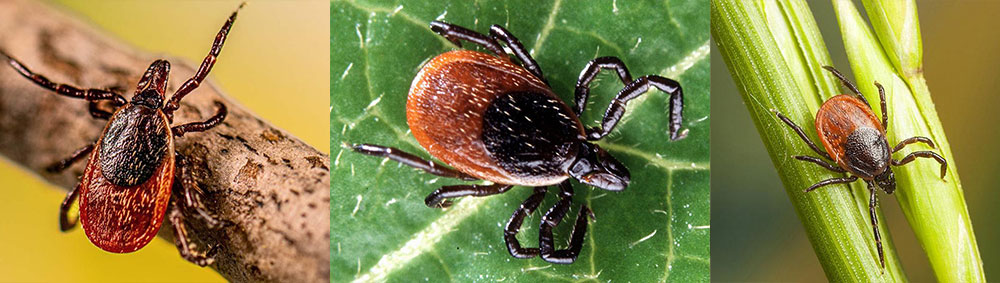
Spending time outside is one of the best parts of spring and summer in Connecticut—but it also means sharing the outdoors with ticks.
Ticks aren’t limited to wooded hiking trails. They can be found in backyards, gardens, parks, tall grass and piles of leaves. Because some ticks can transmit Lyme disease and other illnesses, it’s important to know how to prevent bites, check your skin and properly remove a tick when you find one.
Here’s what to know about ticks, tick bites and the changes you should watch for on your skin.
When Is Tick Season in Connecticut?
Ticks can be active in Connecticut during much of the year, particularly when temperatures are above freezing. But the risk becomes more noticeable during the spring and summer, when people are spending more time outdoors and immature ticks called nymphs are active.
Blacklegged ticks, often called deer ticks, are the ticks that transmit Lyme disease in Connecticut. Nymphs can be especially difficult to spot because of their tiny size, which is one reason a tick bite may go unnoticed.
Rather than relying only on the calendar, it’s a good idea to think about tick prevention anytime you’re spending time in grassy, brushy or wooded areas.
Where Are You Most Likely to Encounter Ticks?
You don’t have to be deep in the woods to pick up a tick. They thrive in grassy, brushy and wooded areas and can be found along the edges of yards, in gardens, around leaf litter and near vegetation.
Everyday activities such as gardening, doing yard work, walking the dog or having children play outside can all lead to tick exposure. Pets may also pick up ticks outdoors and carry them into the house.
How to Check Yourself for Ticks
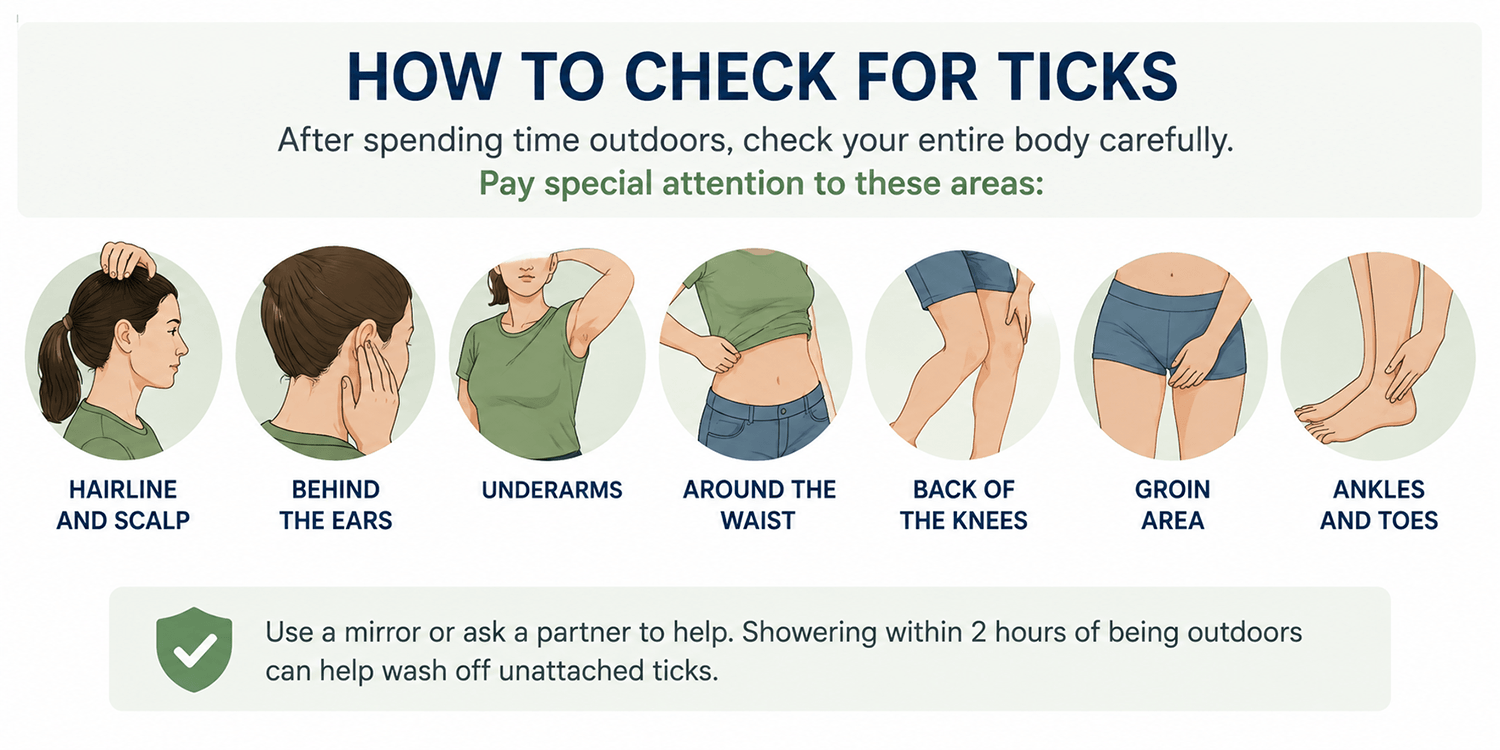
After spending time outdoors, take a few minutes to do a full-body tick check. Ticks often attach in warm or protected areas that aren’t immediately visible.
Pay particular attention to:
- Around the hairline and scalp
- Behind the ears
- Under the arms
- Around the waist
- Behind the knees
- Between the legs and around the groin
- Around the ankles
- Between the toes
Parents should carefully check children after they’ve been playing outside, hiking, camping or spending time in grassy or wooded areas.
Check your clothing and outdoor gear as well. Showering soon after coming indoors may help wash away unattached ticks and is also a good opportunity to check your skin more closely.
What Should You Do If You Find an Attached Tick?
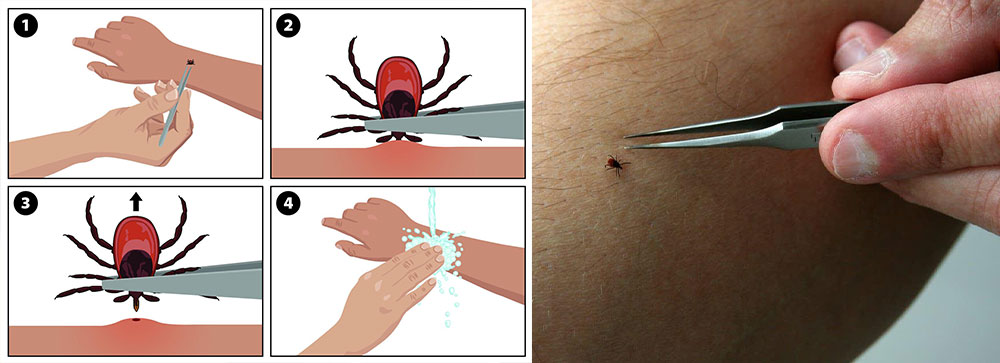
Remove it as soon as you find it. You don’t need to wait for a doctor’s appointment to remove an attached tick.
Use clean, fine-tipped tweezers and grasp the tick as close to the skin as possible. Pull straight upward with steady, even pressure. Avoid twisting or jerking it, which can cause the tick’s mouthparts to break off in the skin.
Once the tick is removed, wash the bite area and your hands with soap and water. Rubbing alcohol can also be used to clean the area.
Skip remedies such as petroleum jelly, nail polish or trying to burn the tick. These methods can delay removal. The best approach is to remove the tick promptly with tweezers.
What If Part of the Tick Remains in Your Skin?
Sometimes small pieces of the tick’s mouthparts remain in the skin after the tick has been removed.
If you can easily grasp them with clean tweezers, you can gently remove them. If not, avoid digging into the skin, which can cause additional irritation.
Keep the area clean and watch it as it heals. Contact a healthcare provider if you develop increasing redness, swelling, pain, drainage or other signs of infection.
What Should You Watch for After a Tick Bite?
Once you’ve removed a tick, make a note of the date and where it was attached. Taking a quick photo of the bite area with your phone can also be useful. If the appearance changes over the next several days, you’ll have something to compare it with.
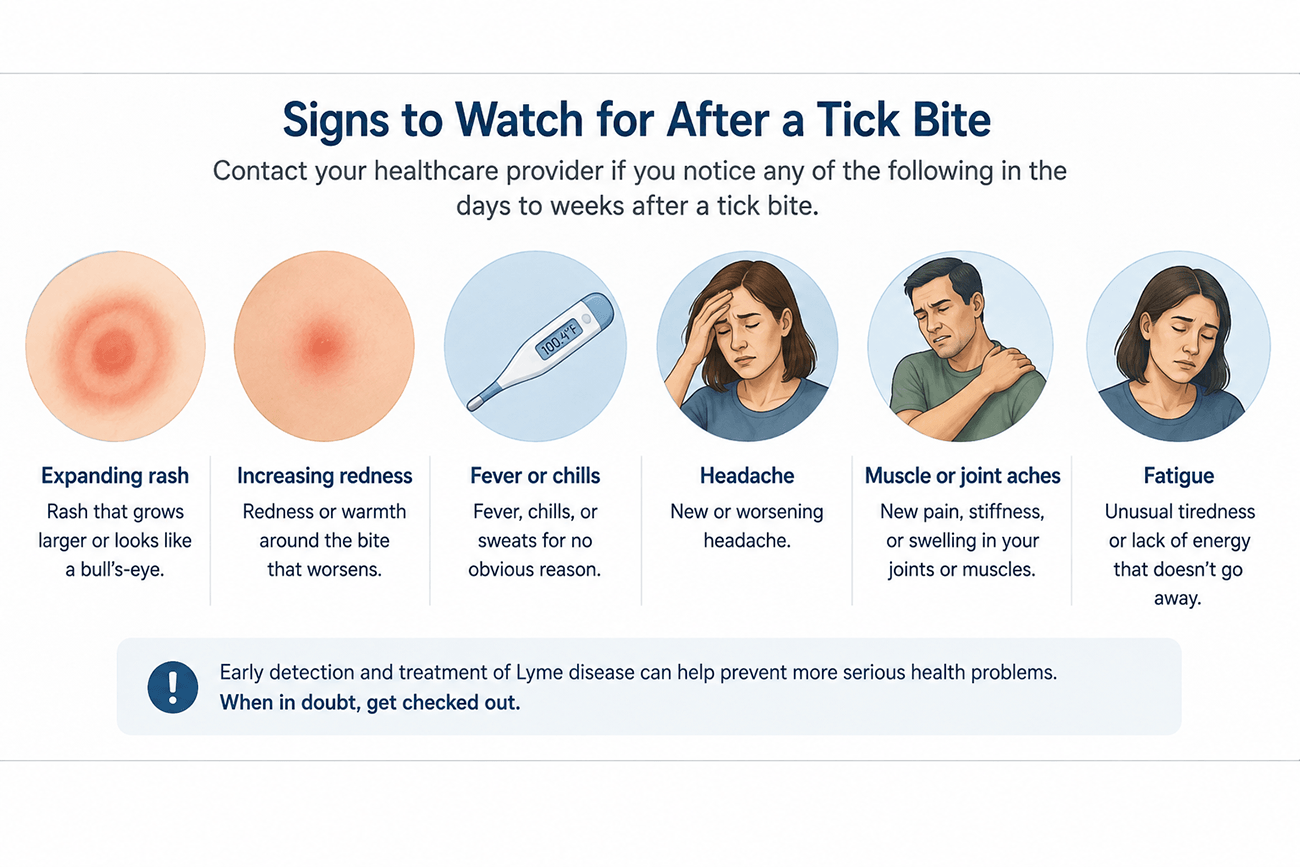
Pay attention to your skin and how you feel during the following days and weeks. Symptoms to watch for include:
- An expanding red, circular or oval rash
- A rash that develops a bull’s-eye-like appearance
- Multiple new areas of redness
- Fever or chills
- Headache
- Unusual fatigue
- Muscle aches
- Joint pain or swelling
- Swollen lymph nodes
Contact a healthcare provider if you develop concerning symptoms after a known or possible tick bite. Learn more about tick bites, Lyme disease symptoms and treatment, including when a rash should be evaluated by a dermatologist.

Does Every Red Tick Bite Mean Lyme Disease?
No. Some redness immediately after a tick bite is common.
A small red bump or area of irritation at the site of the bite may simply be a local reaction. It often appears soon after the tick is removed and begins improving within a day or two.
The rash associated with Lyme disease, known as erythema migrans, is different. It usually appears after a delay and gradually expands over time.
It’s also important to know that a Lyme disease rash doesn’t always look like the classic bull’s-eye seen in photographs. It can be uniformly red, oval or irregular in shape, and its appearance can vary from person to person and across different skin tones.
If you’re watching a rash and notice that it continues to get larger, take another photograph and have it evaluated.
Other skin conditions can also cause circular or ring-shaped rashes. For example, ringworm can sometimes be confused with a Lyme disease rash, which is another reason to have an unexplained or changing rash properly evaluated.
Can You Get Lyme Disease Without Seeing a Tick?
Yes. Many people who develop Lyme disease don’t remember finding a tick.
Nymphal ticks are extremely small, and tick bites are generally painless. A tick can therefore remain attached without being noticed, particularly if it’s on the scalp, back or another difficult-to-see area.
An unexplained expanding rash or flu-like symptoms after spending time outdoors are worth discussing with a healthcare provider even if you never saw a tick.
How Can You Reduce Your Risk of Tick Bites?
A few habits can make a meaningful difference.
When practical, wear long pants and long sleeves in areas where ticks are common. EPA-registered insect repellents can help protect exposed skin when used according to their directions. Clothing and outdoor gear can also be treated with products containing 0.5% permethrin, or you can purchase clothing that has already been treated.
When hiking, stay near the center of trails and avoid brushing against tall grass and vegetation. At home, keeping grass trimmed and removing accumulated leaves and brush can reduce tick-friendly areas around the parts of your yard you use most often.
And don’t skip the tick check. Making it a routine after hiking, gardening, yard work or other outdoor activities is one of the simplest precautions you can take.
When Should You See a Dermatologist?
A rash after a tick bite isn’t automatically Lyme disease. Other skin reactions and conditions can sometimes look similar, which is where an examination by a dermatologist can be helpful.
You should have a rash evaluated if it continues to expand, becomes increasingly painful or swollen, develops drainage, or is accompanied by symptoms such as fever, headache, unusual fatigue, muscle aches or joint pain.
If you’re unsure whether a rash could be related to a tick bite, it’s better to have it evaluated than to rely solely on photographs you find online.
For more information about recognizing tick bites, Lyme disease rashes and treatment, visit our Tick Bites & Lyme Disease treatment page.
Concerned about a rash after a tick bite? Dermatology Physicians of Connecticut offers convenient appointments with board-certified dermatology providers throughout CT.