

Tick Bites & Lyme Disease: Symptoms, Treatment and When to See a Dermatologist
Finding a tick attached to your skin can be unsettling, especially in Connecticut, where Lyme disease and other tick-borne illnesses are common. But a tick bite doesn't necessarily mean you've been infected, and redness around a recent bite isn't always a sign of Lyme disease.
What happens in the days and weeks after the bite is often more important.
A small area of redness that appears right away may simply be your skin reacting to the bite. A rash that develops later and continues to expand, however, deserves medical attention—particularly if you also develop fever, fatigue, headache, muscle aches or joint pain.
At Dermatology Physicians of Connecticut, our board-certified dermatology providers evaluate tick bites, suspicious rashes and other skin changes that can develop after tick exposure. We can help determine whether a rash is consistent with Lyme disease, a reaction to the bite, a skin infection or another dermatologic condition and recommend appropriate treatment or additional care when needed.
Tick Bites in Connecticut
Ticks are a fact of life in Connecticut. They can be found in wooded areas and tall grass, but exposure can also happen much closer to home—in gardens, leaf litter, parks and residential yards.
The blacklegged tick, often called a deer tick, can transmit the bacteria that cause Lyme disease. Lyme disease is the most commonly reported tick-borne illness in Connecticut.
Finding a tick doesn't mean you have Lyme disease. Not every tick is infected, and several factors influence the risk of transmission, including the type of tick and how long it has been attached.
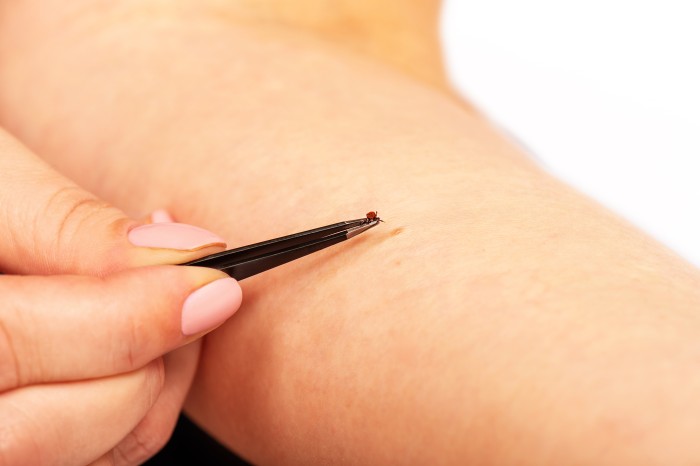
If you find an attached tick, remove it promptly. Then pay attention to the bite area and how you feel over the following days and weeks.
Found a Tick? Know What to Do Next
Learn how to safely remove a tick, check yourself and your family for ticks, reduce your risk of future bites, and know which symptoms to watch for in the days and weeks afterward.
What Does a Tick Bite Look Like?
Immediately after a tick is removed, you may notice a small red bump or a limited area of redness around the bite. This type of local reaction is common and usually begins to improve within a day or two.
What we're more concerned about is a rash that appears later or gets progressively larger.
You should have the area evaluated if you notice:
- A rash that continues to expand
- A circular or oval area of redness
- A rash with a ring or bull's-eye appearance
- Several unexplained areas of redness
- Increasing pain, warmth, swelling or drainage
- A rash accompanied by fever or flu-like symptoms
If you're not sure whether you're looking at a normal reaction to a tick bite or something that needs treatment, that's a good reason to have it checked.
What Does a Lyme Disease Rash Look Like?
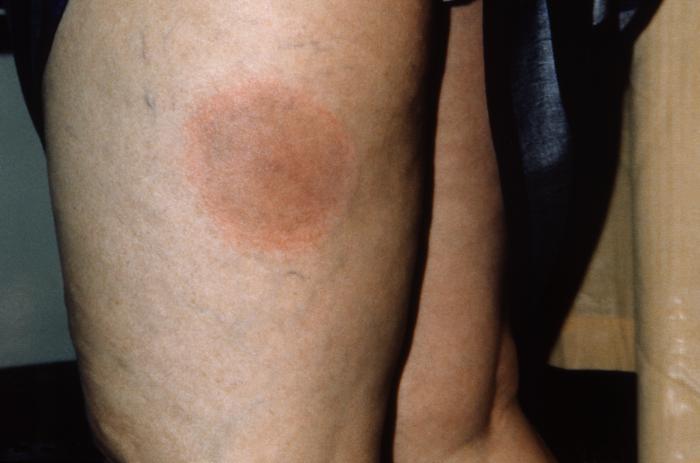
One of the most recognizable signs of Lyme disease is a rash called erythema migrans, often shortened to EM.
It typically appears between 3 and 30 days after the bite of an infected tick and gradually expands over several days.
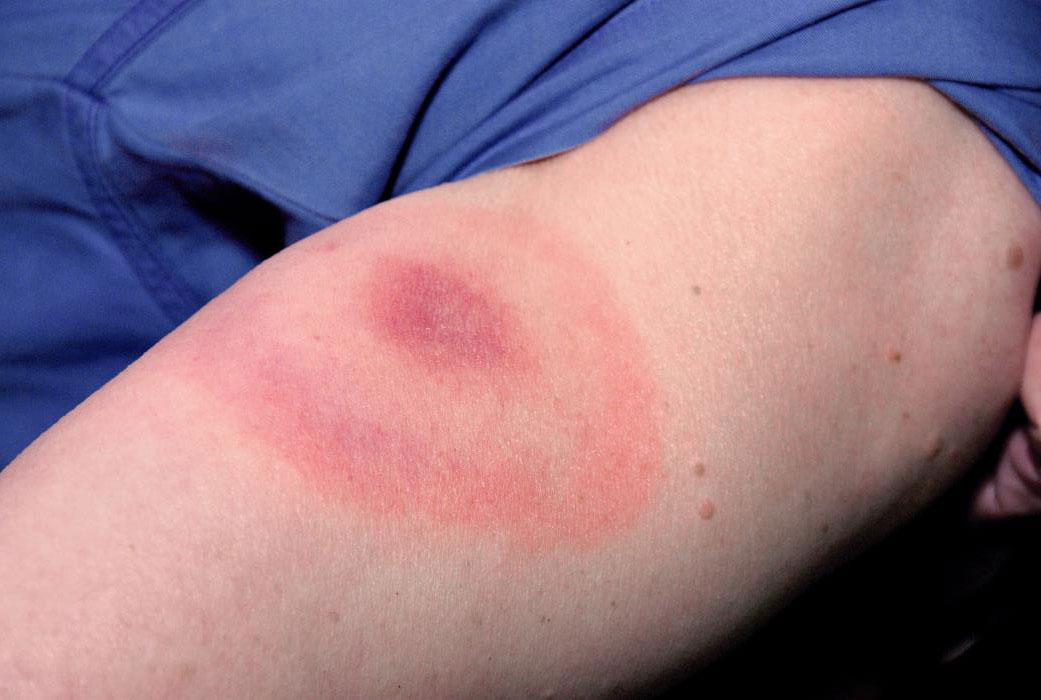
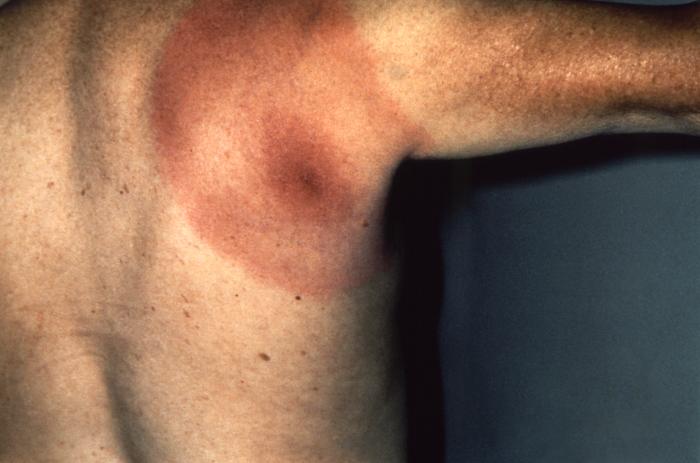
Most people have heard of the classic Lyme disease "bull's-eye" rash—a red ring surrounding an area of clearer skin. But this is where Lyme disease can be misleading: the rash doesn't always look like a bull's-eye.
An erythema migrans rash may be uniformly red, oval, circular or irregularly shaped. It may have areas of lighter and darker color, and it can become quite large as it expands.
The rash may feel warm, but it is not usually very itchy or painful.
And not everyone with Lyme disease develops or notices a rash. That's why other symptoms and a history of possible tick exposure are important too.
Tick Bite Reaction or Lyme Disease Rash?
One of the most common questions we hear is whether redness after a tick bite is normal.
The timing and whether the area is changing can provide important clues.
A Normal Reaction to a Tick Bite
A local reaction usually appears right away or shortly after the bite. It tends to remain relatively small and should begin improving rather than getting larger.
A Possible Lyme Disease Rash
An erythema migrans rash usually doesn't appear immediately. It develops days after the bite and gradually expands.
It also doesn't need to have the textbook bull's-eye appearance.
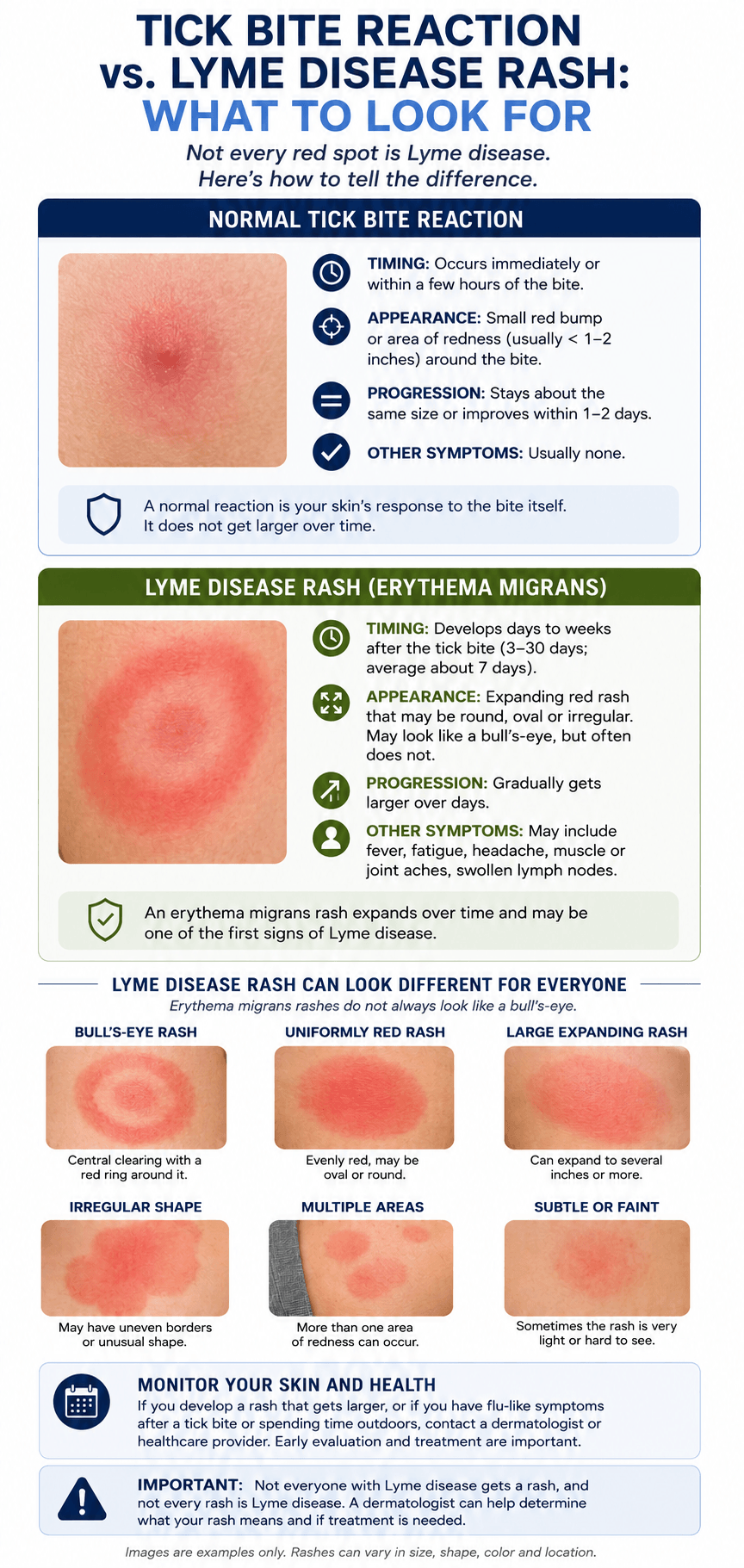
Lyme disease rashes can vary considerably in size, shape and color. The examples above are for educational purposes and should not be used to diagnose a rash. If a rash is expanding or you're unsure what you're seeing, schedule an evaluation.
A useful tip is to take a photograph when you first notice redness around a bite. If the area changes, take another photo. Comparing the images can make it much easier to tell whether a rash is expanding.
Other Symptoms of Lyme Disease
Skin changes aren't the only signs of Lyme disease.
Early symptoms can include:
- Fever or chills
- Fatigue
- Headache
- Muscle aches
- Joint aches
- Swollen lymph nodes
These symptoms may occur with or without a noticeable rash.
If Lyme disease isn't treated, it can sometimes affect the joints, nervous system or heart. Facial weakness, significant joint swelling, severe headache, numbness, heart palpitations, dizziness or other significant symptoms require prompt medical evaluation.
Can a Dermatologist Diagnose a Lyme Disease Rash?
Dermatologists are trained to recognize the many ways diseases and infections can appear on the skin. That's particularly useful with Lyme disease because erythema migrans doesn't always have the classic appearance people expect.
Your dermatologist will consider what the rash looks like, how quickly it developed, whether it is expanding, where it is located and whether you've had possible exposure to ticks.
Just as importantly, we can consider other causes.
A circular or red rash could also be caused by:
- Ringworm
- An insect-bite reaction
- Contact dermatitis
- Eczema
- Cellulitis or another skin infection
- Other inflammatory skin conditions
That's one reason it's better not to diagnose a rash based solely on photographs you find online. Several very different conditions can look surprisingly similar.
Do You Need a Lyme Disease Test?
Not everyone with a suspected Lyme disease rash needs an immediate blood test.
Lyme blood tests look for antibodies produced by your immune system in response to infection. Those antibodies take time to develop, so testing performed very early in an infection can sometimes be negative even when Lyme disease is present.
When someone has a characteristic erythema migrans rash along with an appropriate history of tick exposure, a healthcare provider may be able to make the diagnosis clinically without waiting for a blood test.
When the diagnosis isn't clear, testing may be useful.
The decision depends on your symptoms, what the rash looks like, when it developed and your likelihood of exposure.
How Is Lyme Disease Treated?
Lyme disease is treated with antibiotics. Commonly used medications for early Lyme disease include doxycycline, amoxicillin and cefuroxime axetil.
The appropriate medication and length of treatment depend on several factors, including your symptoms, age, medical history, allergies and other individual considerations.
Most cases of Lyme disease treated in the early stages respond well to appropriate antibiotic treatment. Early diagnosis and treatment can also help prevent more serious complications.
If you think you may have Lyme disease, don't try to determine the appropriate antibiotic or treatment course yourself. Have the rash and your symptoms evaluated by a healthcare provider.
Do You Need Antibiotics After Every Tick Bite?
No.
Finding an attached tick doesn't automatically mean you need antibiotics.
In certain situations, however, preventive antibiotic treatment may be considered after a higher-risk tick bite. The decision depends on factors including the type of tick, where the exposure occurred, how long the tick may have been attached and how recently it was removed.
Because Lyme disease is common in Connecticut, it's worth contacting a healthcare provider if you've recently removed an attached tick and are concerned about your risk.
Don't wait for a rash to appear before asking whether preventive treatment is appropriate. Preventive treatment, when indicated, is time-sensitive.
Lyme Disease Isn't the Only Tick-Borne Illness in Connecticut
Lyme disease gets most of the attention, but Connecticut ticks can transmit other illnesses as well.
Tick-borne diseases found or monitored in Connecticut include anaplasmosis, babesiosis, ehrlichiosis, hard tick relapsing fever, Powassan virus disease, spotted fever rickettsiosis and tularemia.
Different ticks transmit different infections, and the symptoms aren't always the same. Some tick-borne illnesses may cause fever, chills, headache, fatigue or muscle aches without producing a distinctive rash.
If you become ill after a known or suspected tick bite—even if your skin looks normal—contact a healthcare provider.
Can a Tick Bite Become Infected?
Yes. A tick bite can sometimes develop a bacterial skin infection unrelated to Lyme disease.
Watch the bite area for:
- Increasing redness
- Warmth
- Swelling
- Worsening pain or tenderness
- Pus or drainage
- Red streaking
- Fever
These symptoms are another reason to have the area examined rather than assuming every change following a tick bite is Lyme disease.
When Should You See a Dermatologist After a Tick Bite?
You don't necessarily need a dermatology appointment simply because you found a tick. But if something unusual develops on your skin afterward, a dermatologist can help determine what's causing it.
Schedule an evaluation if:
- The redness around a bite is getting larger instead of smaller
- You develop a circular, oval or bull's-eye-like rash
- You notice an unexplained rash after spending time outdoors
- The bite becomes increasingly painful, swollen or warm
- You see drainage or other signs of infection
- A rash appears along with fever, fatigue, headache, muscle aches or joint pain
- The rash isn't improving
- You're simply not sure whether what you're seeing is normal
Also remember that you may never see the tick.
Ticks—particularly immature blacklegged ticks—can be very small, and their bites often go unnoticed. If you develop an unexplained expanding rash, tell your healthcare provider about recent hiking, gardening, yard work, camping or other time spent in wooded or grassy areas.
Want to learn more about preventing tick bites? Read our Tick Season in Connecticut guide for tips on checking for ticks, safely removing an attached tick and knowing what to watch for after a bite.
When Is a Tick Bite an Emergency?
A skin rash can often be evaluated during a regular medical appointment, but certain symptoms shouldn't wait.
Seek prompt medical care if you develop significant symptoms following a tick bite, such as facial weakness or paralysis, severe headache, fainting or severe dizziness, chest pain, significant heart palpitations, confusion or severe weakness.
Call 911 or seek emergency care for symptoms such as difficulty breathing or other signs of a severe allergic reaction.
Tick Bite Treatment in CT and Lyme Disease Rash Evaluation
If you've developed a strange rash after a tick bite, it's easy to assume the worst. It's also easy to dismiss the redness as "just a bug bite." Neither approach is particularly helpful.
If you're looking for tick bite treatment in CT, the appearance of the rash, when it started and whether it's changing can provide important clues about what to do next. A dermatologist can evaluate these changes and help determine whether you're dealing with a simple bite reaction, Lyme disease, a skin infection or another condition entirely.
At Dermatology Physicians of Connecticut, our board-certified dermatology providers evaluate tick bites, Lyme disease rashes and other unexplained skin changes at convenient locations throughout Connecticut.
Concerned about a tick bite or a new rash?
Schedule an appointment with Dermatology Physicians of Connecticut.
Frequently Asked Questions About Tick Bites and Lyme Disease
Does every tick bite cause Lyme disease?
No. Not every tick carries the bacteria that cause Lyme disease, and being bitten by an infected tick doesn't necessarily mean the infection was transmitted.
Your risk depends on several factors, including the type of tick and how long it was attached.
Is a red spot after removing a tick Lyme disease?
Usually not.
A small area of redness that appears immediately after a tick bite is commonly a reaction to the bite itself. It should remain relatively small and begin to improve.
A Lyme disease rash generally appears later and gradually expands.
Does a Lyme disease rash always look like a bull's-eye?
No. This is one of the biggest misconceptions about Lyme disease.
Erythema migrans can be uniformly red, circular, oval or irregular and may not have the central clearing that creates the familiar bull's-eye appearance.
How soon does a Lyme disease rash appear?
An erythema migrans rash typically develops 3 to 30 days after the bite of an infected tick.
A red spot that appears immediately after removing a tick is more likely to be a local reaction to the bite, particularly if it begins improving rather than expanding.
Can you have Lyme disease without a rash?
Yes.
Not everyone with Lyme disease develops or notices an erythema migrans rash. Other early symptoms can include fever, fatigue, headache, muscle aches, joint pain and swollen lymph nodes.
Should I get tested for Lyme disease immediately after a tick bite?
Usually not simply because you've been bitten.
Lyme disease blood tests measure your immune system's antibody response, and those antibodies can take several weeks to develop. Testing too early can therefore produce a negative result even when an infection is present.
A healthcare provider can determine whether testing is appropriate based on your symptoms, possible exposure and how much time has passed.
Should I take antibiotics after a tick bite?
Not every tick bite requires antibiotics.
In certain higher-risk situations, a healthcare provider may recommend preventive antibiotic treatment after a tick bite. Because this treatment is time-sensitive, contact a healthcare provider promptly if you're concerned about a recently removed tick.
Should I save the tick?
You can.
Place the tick in a sealed container or bag and make a note of when you removed it. Taking a clear photograph can also help with identification.
Don't delay removing an attached tick just because you're trying to preserve it.
What if I don't remember being bitten by a tick?
That's common.
Ticks can be extremely small, and you may not feel the bite. A known tick bite isn't required to consider Lyme disease when someone develops a compatible rash or symptoms after possible exposure.
Can a dermatologist tell if my rash is Lyme disease?
A dermatologist can evaluate whether a rash is consistent with erythema migrans and distinguish it from many other skin conditions that can look similar.
The appearance of the rash is only part of the picture. Your dermatologist will also consider how the rash has changed, your symptoms and your likelihood of tick exposure.