
FDA Approves Bemotrizinol: The New Sunscreen Ingredient Dermatologists Have Been Waiting For
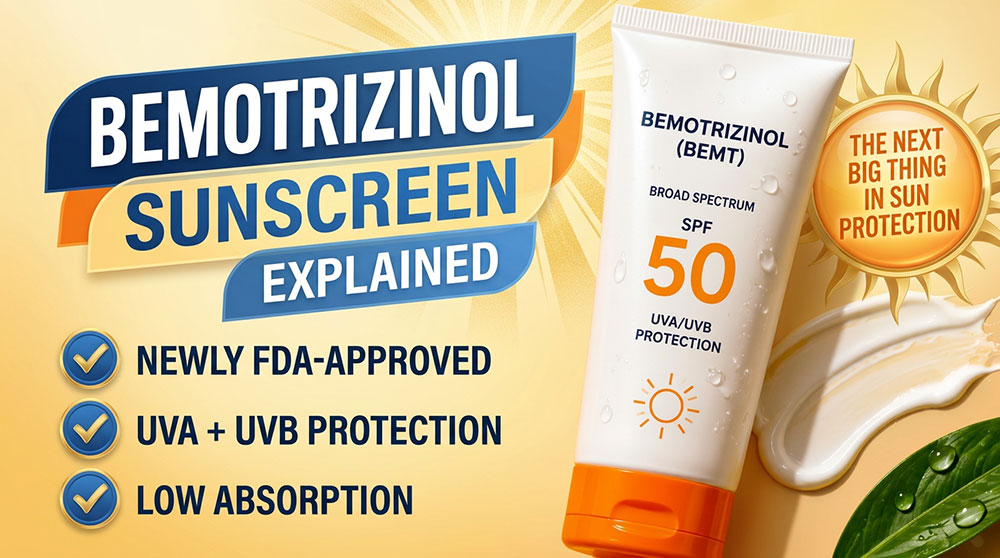
The FDA has approved a new sunscreen ingredient that has been used safely and effectively in Europe, Asia, and other parts of the world for years. The ingredient, called bemotrizinol, represents the first major sunscreen filter approval in the United States in decades and is being welcomed by dermatologists and skin cancer prevention experts.
For patients looking to better protect their skin from sun damage, premature aging, and skin cancer, the FDA approval of bemotrizinol is an exciting development. While new products containing the ingredient may take time to reach store shelves, the decision signals progress in sunscreen innovation and expanded options for consumers.
According to a recent article from the New York Times, dermatologists have long advocated for access to newer sunscreen technologies that provide strong broad-spectrum protection and improved cosmetic elegance.
What Is Bemotrizinol and Why Did the FDA Approve It?
Bemotrizinol is a broad-spectrum sunscreen ingredient designed to protect against both UVA and UVB radiation.
UVA rays penetrate deeper into the skin and contribute to premature aging, wrinkles, and hyperpigmentation. UVB rays are primarily responsible for sunburns and play a significant role in the development of skin cancer.
One reason dermatologists are excited about bemotrizinol is its excellent photostability. Unlike some sunscreen ingredients that break down after prolonged sun exposure, bemotrizinol remains stable and continues providing effective protection.
The FDA determined that bemotrizinol meets current standards for safety and effectiveness and approved its use in sunscreen products for adults and children six months of age and older.
How Bemotrizinol Improves Broad-Spectrum Sunscreen Protection
Many sunscreen ingredients currently available in the United States provide strong UVB protection but may offer less comprehensive UVA coverage than newer filters used internationally.
Bemotrizinol helps address this gap by providing:
- Broad-spectrum UVA and UVB protection
- High photostability
- Compatibility with other sunscreen ingredients
- Improved formulation flexibility for manufacturers
- Potentially more cosmetically elegant sunscreen products
These benefits may lead to sunscreens that feel lighter on the skin, blend more easily, and encourage more consistent daily use.
What You Really Need To Know About Picking A Sunscreen
Why Dermatologists Are Excited About This New FDA-Approved Sunscreen Ingredient
For years, dermatologists have expressed concerns that Americans have had access to fewer sunscreen filter options than consumers in Europe and Asia.
The American Academy of Dermatology (AAD) praised the FDA’s decision, noting that expanding sunscreen options can help people find products they are more likely to use consistently.
Consistent sunscreen use remains one of the most effective ways to reduce UV damage and lower the risk of developing skin cancer.
When Will Sunscreens With Bemotrizinol Be Available in the United States?
Although the FDA has approved bemotrizinol, new sunscreen products containing the ingredient will not appear overnight.
Manufacturers still need time to develop, test, market, and distribute new formulations. Industry experts expect products containing bemotrizinol could begin reaching consumers over the next year.
Until then, dermatologists continue recommending the use of broad-spectrum sunscreens with:
- SPF 30 or higher
- Broad-spectrum UVA and UVB protection
- Water-resistant formulas when appropriate
- Daily application and regular reapplication
What Connecticut Residents Should Know About Daily UV Exposure
Many people associate sun damage with beach vacations and summer activities, but ultraviolet radiation affects Connecticut residents year-round.
UV exposure occurs during everyday activities such as:
- Walking the dog
- Gardening
- Youth sports events
- Outdoor exercise
- Driving
- Running errands
Even on cloudy days, ultraviolet radiation can penetrate the atmosphere and contribute to cumulative skin damage over time.
Regular sunscreen use, protective clothing, and routine skin examinations remain important components of skin cancer prevention.
What to Expect During Your Yearly Skin Exam
UV Awareness: What Every Connecticut Resident Should Know About Skin Cancer Prevention
Protect Your Skin With Expert Dermatology Care in Connecticut
At Dermatology Physicians of Connecticut, our board-certified providers help patients of all ages protect their skin from sun damage and detect skin cancer early. We ofer the best care in Medical Dermatology and Pediatric Dermatology
Whether you need a comprehensive skin examination, treatment for sun damage, or guidance on choosing the best sunscreen for your skin type, our team is here to help:
Book An Appointment Online
Frequently Asked Questions About Bemotrizinol
What is bemotrizinol?
Bemotrizinol is a broad-spectrum sunscreen ingredient that protects against both UVA and UVB rays. It has been used for years in Europe and Asia and was recently approved by the FDA for use in the United States.
Is bemotrizinol safe?
Yes. The FDA determined that bemotrizinol meets safety and effectiveness standards for sunscreen use in adults and children six months of age and older.
Why is the FDA approval of bemotrizinol important?
The approval gives sunscreen manufacturers access to newer UV-filter technology that may improve sun protection, UVA coverage, and overall product performance.
Does bemotrizinol prevent skin cancer?
No sunscreen can completely prevent skin cancer, but regular use of broad-spectrum sunscreen is an important part of reducing UV damage and lowering skin cancer risk.
When will sunscreens containing bemotrizinol be available?
Manufacturers are expected to begin releasing products containing bemotrizinol as new formulations reach the U.S. market following FDA approval.