
UV Awareness Month: What Every Connecticut Resident Should Know About Skin Cancer Prevention

You walked the dog this morning, grabbed the mail at noon, and made two trips from the car to the grocery store. None of that felt like sun exposure. But your skin counted every minute of it, and that’s the part most people miss about skin cancer prevention: the damage isn’t just from beach days and ballgames. It’s cumulative, it’s mostly silent, and it adds up from ordinary errands we never think to protect against. July is UV Awareness Month, and it’s the nudge most of us need to take this seriously.
Skin cancer is the most common cancer in the United States. The encouraging part is that most cases are preventable. What follows covers what UV light actually does to your skin, what your body can and can’t defend against, and the habits that genuinely lower your risk.
Why UV Exposure Is More Dangerous Than Most People Realize
UV radiation is easy to underestimate because so much of it is invisible. It passes through clouds and window glass, and it reflects off water, cement, sand, and snow. In Connecticut, that means your skin is taking UV hits in February just as it does in July, whether you’re shoveling the driveway or sitting by a sunny window.
The trouble is how the damage actually works. UV rays harm the DNA inside your skin cells, and those mutations can build over years into basal cell carcinoma, squamous cell carcinoma, or melanoma. Every sunburn raises your risk. So do the unprotected errands that never felt like sun exposure at all.
The scale is real. The CDC estimates roughly 6.1 million adults are treated for basal and squamous cell carcinomas each year, at a cost near $8.9 billion. About one in five Americans will develop skin cancer by age 70, and roughly 90% of nonmelanoma skin cancers are linked to UV radiation from the sun.
What makes this worth your attention now is the lag. Skin cancer can take 20 years or more to develop, so the protection you practice this month is really an investment against a problem you won’t see for decades. Which is, admittedly, a terrible pitch for getting people to act immediately. Act anyway.
UVA vs UVB: The Two Types of UV Radiation Damaging Your Skin
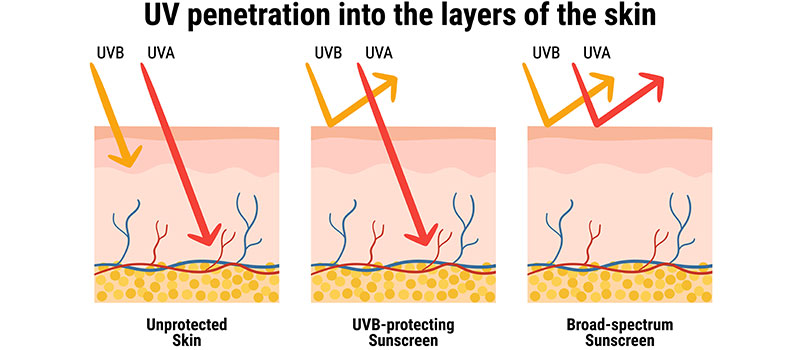
The sun sends two kinds of ultraviolet rays through the ozone layer to your skin, and they do different things. UVB is the shorter-wavelength ray that causes sunburn and tanning, whether from sunlight or a tanning bed. UVA reaches deeper into the skin and drives premature aging, wrinkling, and DNA damage you can’t feel happening.
Both contribute to skin cancer, which is why protecting against only one isn’t enough. Here’s a detail most people don’t know: while UVB is more potent, your daily UVA exposure is roughly 20 to 40 times greater, and it stays high across more of the day. That steady, low-grade UVA is quietly aging your skin during your commute.
This is also where sunscreen labels trip people up. The SPF number on the bottle reflects only UVB protection. To be covered against UVA too, your sunscreen has to say “broad-spectrum” on the label. If it doesn’t, you’re protected from burning but not from the deeper aging and damage UVA causes.
Short version: UVA ages you, UVB burns you, and both raise your skin cancer risk. Broad-spectrum coverage handles both.
How Does the Skin Protect Against UV Light Damage, And When Does It Fail?
Your skin has a built-in defense system, and it’s worth understanding because it explains both why tanning happens and why it isn’t actually safe. The skin is your body’s largest organ, and in the lower layer of the epidermis, cells called melanocytes produce melanin, the pigment that gives skin its color. When UV hits, those cells make more pigment, which is why you tan or darken.
That tan is your skin’s protective response to UV damage that’s already occurred. Melanin absorbs high-energy UV and shields the DNA underneath. But the protection has real limits.
Why melanin isn’t enough on its own
Not all melanin works equally. Eumelanin, the darker pigment, offers more protection, while pheomelanin, the yellow-reddish kind, is far less effective and can in some cases raise DNA-damage risk. That’s why people with fair skin who freckle and burn get less natural defense, and why even people with darker skin or who tan easily can still suffer UV damage.
Melanin mainly blocks the UVB rays that cause burns. UVA still penetrates deeply and causes aging and DNA harm, so your natural pigment was never built to handle everything.
Your skin also repairs UV-induced DNA damage through enzyme pathways working behind the scenes. The catch is that these repair systems can be overwhelmed by repeated, cumulative exposure. When that happens, errors slip through, and those are the mutations that can become skin cancer. This is exactly why melanin should be paired with sunscreen and clothing rather than relied on alone.
What Vitamin Helps Protect the Skin From UV Damage (And What It Can’t Do Alone)
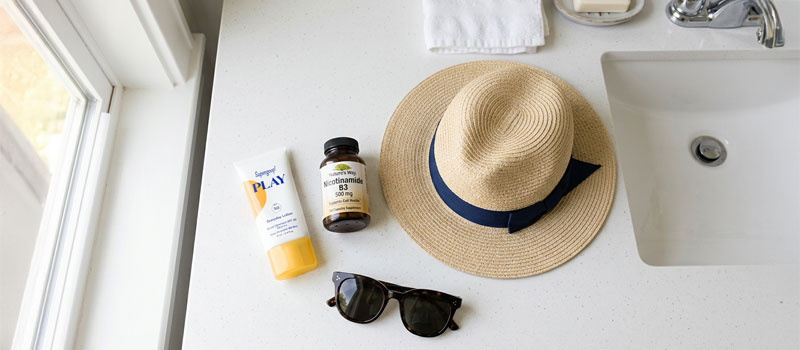
The vitamin with the strongest evidence here is nicotinamide, a form of vitamin B3. It works by reducing UV-light damage and boosting your skin’s own DNA repair. One detail matters: only nicotinamide has shown this benefit, not other forms of B3 like niacin.
The research is promising. A phase 3 randomized trial found nicotinamide lowered the rate of new precancerous actinic keratoses at a dose of 500 mg twice daily. A 2025 JAMA Dermatology study of more than 33,000 veterans linked nicotinamide use to a 14% overall reduction in future non-melanoma skin cancers, with about a 54% reduction among people who started it after their first skin cancer.
That said, our board-certified dermatologists treat nicotinamide as a useful add-on, not a substitute. It’s generally considered for higher-risk patients, such as those with heavy past sun exposure, blistering sunburns, many precancerous spots, or a prior skin cancer. It is not indicated for melanoma, and it doesn’t replace sunscreen, protective clothing, or regular skin checks.
What about vitamin D and antioxidants?
Your skin makes vitamin D from UV exposure, but you can also get it from leafy greens, fortified milk, and supplements, and true deficiency from sun avoidance is uncommon. A diet rich in vitamins A, C, and E may help your skin fight oxidative stress, but nutrition supplements protection, it doesn’t replace it. No food choice offsets repeated UV exposure.
Your Practical UV Protection Playbook: Habits That Actually Work
The most effective protection is a small set of habits you can actually keep. The CDC advises protecting your skin any time the UV Index is 3 or higher, and in the continental U.S., UV rays are strongest between 10 a.m. and 4 p.m. daylight saving time. A few core moves cover most situations:
- Wear broad-spectrum sunscreen daily. Dermatologists broadly recommend SPF 30 or higher for everyday use, which blocks about 97% of UV rays. For extended time outdoors, step up to a water-resistant SPF 50 or higher, reapplied every two hours or after swimming or sweating.
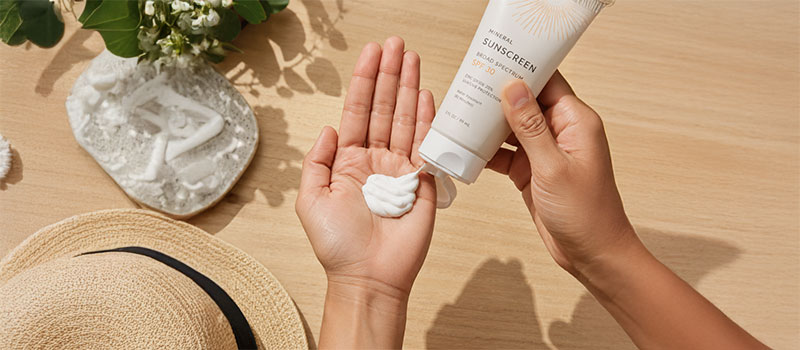
- Use enough, and apply it early. Most adults need about one ounce, roughly a shot glass full, to cover exposed skin. Put it on about 30 minutes before heading out so it forms an even layer.
- Cover up. Tightly woven, darker, heavier fabrics block more UV. A simple test: if you can see light through a fabric, UV can pass through too. Add a hat with a 3-inch brim and sunglasses that block 99–100% of UVA and UVB.
- Seek shade during peak hours, and don’t forget an SPF lip balm.
On sunscreen type, you have options. Chemical sunscreens absorb UV before it reaches the skin, while physical (mineral) sunscreens with zinc oxide or titanium dioxide reflect and scatter it. Mineral options give broad-spectrum protection and rarely irritate, which makes them a solid pick if you have sensitive skin.
If you only remember one number, make it SPF 30 broad-spectrum, applied to everything the sun can reach.
Key Takeaways: What to Do This UV Awareness Month and Every Month After
UV protection is a year-round habit because UV reaches you on cloudy days and bounces off snow, water, and pavement in every Connecticut season. Here’s what’s worth carrying forward:
- Make broad-spectrum SPF 30+ part of your daily routine, the way you already brush your teeth.
- Treat tanning, including tanning beds, as skin damage rather than a healthy glow.
- Do a skin self-exam each month, and watch for anything new, changing, itching, bleeding, or failing to heal.
- Protect children early, since the majority of lifetime sun exposure happens before age 18.

The most reliable habit of all is a yearly professional exam. Most skin cancers are treated successfully when caught early, which is why an annual visit matters. You can learn what to expect from a skin cancer screening with one of our board-certified providers, then book your appointment online. Let this month be the prompt you actually use.
Frequently Asked Questions
What is UV Awareness Month and when does it take place?
UV Awareness Month, also called UV Safety Awareness Month, takes place each July. It was established by the U.S. Department of Health and Human Services with support from groups including the American Academy of Dermatology, the Skin Cancer Foundation, and the CDC. The goal is to draw attention to the risks of UV overexposure during the brightest summer months and encourage habits that help prevent skin cancer, premature aging, and eye damage.
What is the difference between UVA and UVB rays?
UVA rays reach deeper into the skin and drive premature aging and wrinkling, while UVB rays are the main cause of sunburn and tanning. Both damage skin-cell DNA and contribute to skin cancer. Because SPF measures only UVB protection, you need a broad-spectrum sunscreen to be covered against both.
How does repeated sun exposure increase skin cancer risk?
Each UV exposure damages the DNA in your skin cells, and your repair systems can be overwhelmed when that damage keeps accumulating. Both clinical and population studies link cumulative sun dose and the number of sunburns to skin cancer. Melanoma risk roughly doubles after more than five sunburns.
How does the skin naturally protect itself against UV light damage?
Cells called melanocytes produce melanin, a pigment that absorbs UV and shields the DNA underneath, which is why your skin tans after exposure. The skin also repairs UV-induced DNA damage through enzyme pathways. But melanin mainly blocks UVB and can’t stop all UVA, and the repair systems can be overwhelmed, so natural defenses aren’t enough on their own.
What vitamin helps protect the skin from UV damage?
Nicotinamide, a form of vitamin B3, has the strongest evidence. It reduces UV-light damage and boosts the skin’s DNA repair, and studies have tied it to fewer precancerous lesions and non-melanoma skin cancers. It’s generally suggested for higher-risk patients as an add-on, not as a replacement for sunscreen, and it’s not indicated for melanoma.
What SPF level do dermatologists recommend for daily use?
For everyday use, dermatologists broadly recommend a broad-spectrum, water-resistant sunscreen of SPF 30 or higher, which blocks about 97% of UV rays. For extended outdoor activity, step up to SPF 50 or higher and reapply every two hours or after swimming or sweating. Most adults need about a shot glass full to cover exposed skin.
Can you get UV skin damage on a cloudy day?
Yes. UV rays reach you on cloudy and cool days because certain UV light penetrates fog and clouds, so a sunburn is possible even when it’s overcast. The AAD advises using sunscreen whenever you’ll be outdoors, cloud cover included.
Is a base tan a sign of healthy skin?
No. A base tan is a sign of skin damage, not health, despite how the tanning industry markets it. A tan is your skin’s response to UV injury, and that damage can lead to wrinkles, leathery skin, and skin cancer over time.
How often should I see a dermatologist for a skin cancer screening?
The Skin Cancer Foundation recommends a professional skin exam once a year, plus a monthly self-exam, or sooner if you notice something suspicious or have risk factors. Higher-risk patients, such as organ transplant recipients, may need exams more often. Your provider will set a schedule based on your personal risk.
What are the early warning signs of skin cancer?
For moles, dermatologists use the ABCDE rule: Asymmetry, irregular Border, uneven Color, Diameter larger than about a pencil eraser, and Evolving or changing spots. Also watch for new growths or any lesion that itches, bleeds, or doesn’t heal. Basal cell carcinomas often look like pink bumps on sun-exposed skin, while squamous cell carcinoma commonly appears on the head, ears, hands, neck, and forearms.
Do tanning beds cause skin cancer?
Yes. The World Health Organization classifies tanning beds as a Group 1 carcinogen, meaning they’re known to cause cancer in humans. Indoor tanning even once raises the risk of all skin cancers, and using a tanning bed before age 35 increases melanoma risk by 75%. Indoor tanning accidents and burns also send more than 3,000 people to emergency rooms each year.
Are children more vulnerable to UV damage than adults?
Yes. Infants and toddlers up to about age four have lower melanin levels and a thinner outer skin layer, and children’s eyes let more UV through until about age 10. Children are particularly vulnerable to UV damage because their skin is still developing and they often spend more time outdoors. Significant UV damage accumulates during childhood and adolescence, making early sun-protection habits especially important. Severe childhood sunburns have been linked to a higher risk of melanoma later in life. The Skin Cancer Foundation advises keeping infants under six months out of the sun using clothing, hats, and shade rather than sunscreen.