
Shingles: Symptoms, Prevention, and Why the Shingles Vaccine Matters

Shingles often begins quietly—with a strange tingling sensation, mild discomfort, or pain that doesn’t seem to have a clear cause. Within days, it can develop into a painful, blistering rash that interferes with daily life. For some people, the pain doesn’t stop when the rash fades and can linger for months or longer.
The good news is that shingles can often be recognized early, managed effectively, and in many cases, prevented altogether. At Dermatology Physicians of Connecticut, our board-certified dermatologists help patients across Connecticut understand shingles, recognize symptoms early, and take steps to reduce future risk through expert guidance and prevention.
What Is Shingles?
Shingles, also called herpes zoster, is caused by the reactivation of the varicella-zoster virus—the same virus responsible for chickenpox. After chickenpox resolves, the virus remains dormant in the nervous system. Years or even decades later, it can reactivate as shingles.
Anyone who has had chickenpox—or the chickenpox vaccine—can develop shingles. Risk increases with age and when the immune system is weakened due to stress, illness, or certain medications.
What Are the Symptoms of Shingles?
Shingles typically develops in stages and most often affects only one side of the body or face.
Early Symptoms
-
Tingling, burning, or sharp pain
-
Sensitivity to touch
-
Fatigue or headache
-
Mild fever or chills
Rash and Blistering Stage
-
A red rash that appears in a band or stripe
-
Fluid-filled blisters that may be painful or itchy
-
Blisters that crust over and heal within 2–4 weeks
The images included with this article show the stages of shingles lesions, from early redness to blistering and healing, as well as examples of what shingles commonly looks like on the skin. Recognizing these signs early is important.
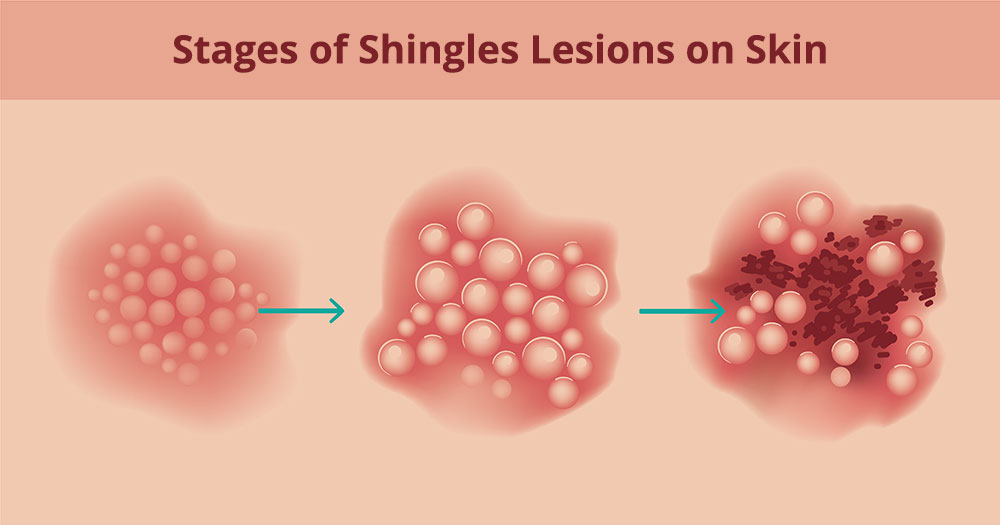
Stages of Shingles Lesions on Skin
Why Shingles Can Be Serious
Shingles is not just uncomfortable—it can lead to complications, especially in older adults.
Potential Complications Include:
-
Postherpetic neuralgia (PHN) — long-lasting nerve pain after the rash resolves
-
Eye involvement that may affect vision
-
Secondary skin infections
-
Increased severity in people with weakened immune systems
Prompt medical evaluation can help reduce the risk of these outcomes.
When to Seek Medical Care for Shingles
If you suspect shingles, it’s important to seek medical care as soon as possible—ideally within 72 hours of the rash appearing. Early evaluation allows providers to determine next steps and reduce the risk of complications.
Shingles Prevention: Why the Vaccine Matters
Vaccination is the most effective way to reduce the risk of shingles and its complications.
What Is the Best Age to Get the Shingles Vaccine?
-
Recommended for adults age 50 and older
-
Adults 19 and older with weakened immune systems may also be eligible
How Is the Shingles Vaccine Given?
-
Administered as a two-dose series
-
Second dose is given 2–6 months after the first
-
The vaccine does not contain live virus
Even if you’ve had shingles before, vaccination can help prevent future outbreaks and reduce the risk of severe nerve pain.
Why You Should Talk to Your Healthcare Provider
Shingles risk varies from person to person. Speaking with your healthcare provider or dermatologist can help determine:
-
Your personal risk factors
-
Whether vaccination is appropriate
-
When to receive the vaccine
-
What steps to take if symptoms develop
This is especially important if symptoms involve the face or eyes.
Expert Evaluation and Guidance at Dermatology Physicians of Connecticut
As one of Connecticut’s top-rated dermatology practices, Dermatology Physicians of Connecticut provides expert evaluation and guidance for patients concerned about shingles—from symptom recognition to prevention counseling.
If you’re experiencing symptoms or have questions about shingles prevention, our dermatology team can help guide next steps and determine whether further evaluation is needed.
Frequently Asked Questions About Shingles
What causes shingles?
Shingles is caused by the reactivation of the varicella-zoster virus, which remains dormant in the body after chickenpox.
What are the first signs of shingles?
Early signs often include tingling, burning, or pain on one side of the body, followed by a red rash and blistering.
How soon should shingles be evaluated?
Evaluation is recommended as soon as symptoms appear, ideally within 72 hours of rash onset.
Who should get the shingles vaccine?
Adults age 50 and older, and adults 19 and older with weakened immune systems, are recommended to receive the shingles vaccine.
Can you get shingles more than once?
Yes. Shingles can recur, which is why vaccination is still recommended even after a previous episode.
Is shingles contagious?
Shingles itself is not contagious, but the virus can spread to someone who has never had chickenpox, causing chickenpox rather than shingles.
Schedule Your Skin Exam with Dermatology Physicians of Connecticut
Routine skin exams are a simple, proactive way to protect your health. At Dermatology Physicians of Connecticut, our experienced providers offer comprehensive skin cancer screenings for adults and children at convenient locations across Connecticut.
Don’t wait—early detection saves lives.
📍 Branford
📍 Fairfield
📍 Hamden
📍 New Haven
📍 New London
📍 Norwalk
📍 Oxford
📍 Shelton
📍 Stamford
Dermatology Physicians of CT Google Reviews