
How to Prevent Melanoma: A Dermatologist’s Guide for Connecticut Patients

Melanoma is the most serious form of skin cancer—but it’s also one of the most preventable. At Dermatology Physicians of Connecticut, we help patients across the state take proactive steps to reduce their risk and detect skin cancer early.
Whether you’re at the beach, commuting, or spending time outdoors, daily sun protection plays a critical role in keeping your skin healthy.
How to Prevent Melanoma
The best way to prevent melanoma is to protect your skin from ultraviolet (UV) exposure by:
- Wearing broad-spectrum SPF 30+ sunscreen daily
- Avoiding peak sun hours (10 a.m. – 4 p.m.)
- Wearing protective clothing and hats
- Avoiding tanning beds
- Getting regular skin cancer screenings
These simple habits can significantly reduce your risk of developing melanoma.
Why Melanoma Prevention Matters
Melanoma is the most dangerous form of skin cancer because it can spread quickly if not detected early. Most melanomas are caused by ultraviolet (UV) radiation from the sun or indoor tanning.
The good news is that melanoma is often preventable with consistent sun protection and early detection.
Learn more about skin cancer screenings.
1. Wear Sunscreen Every Day
Daily sunscreen use is one of the most effective ways to prevent melanoma.
- Use broad-spectrum SPF 30 or higher
- Apply every morning
- Reapply every 2 hours when outdoors
Even in Connecticut, UV exposure occurs year-round—even on cloudy days.
2. Avoid Peak Sun Exposure
UV rays are strongest between 10 a.m. and 4 p.m.
- Seek shade whenever possible
- Plan outdoor activities earlier or later in the day
- Use extra caution near water and sand
3. Wear Protective Clothing
Protective clothing adds another layer of defense against UV exposure.
- Wide-brimmed hats
- UV-blocking sunglasses
- UPF-rated clothing
4. Avoid Tanning Beds
There is no safe way to tan using UV light. Indoor tanning significantly increases melanoma risk and accelerates skin aging.
Explore cosmetic dermatology services.
5. Check Your Skin Monthly
What are the early signs of melanoma?
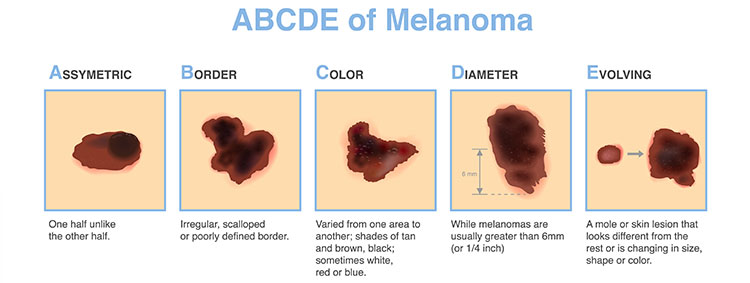
Use the ABCDE rule to look for suspicious moles or spots:
- Asymmetry
- Border irregularity
- Color variation
- Diameter larger than a pencil eraser
- Evolving (changing over time)
If you notice any changing moles or new spots, schedule an evaluation promptly.
Schedule a skin cancer screening.
6. Schedule Annual Skin Exams
Most adults should have a yearly full-body skin exam with a dermatologist.
You may need more frequent visits if you:
- Have fair skin or a history of sunburns
- Have many moles
- Have a personal or family history of skin cancer
At Dermatology Physicians of Connecticut, our board-certified dermatologists specialize in early skin cancer detection and treatment.
7. Melanoma Can Affect All Skin Types
Melanoma can occur in all skin tones—not just fair skin. Regular skin checks and prevention habits are important for everyone.
8. Protect Your Skin Year-Round
Melanoma risk builds over time from cumulative sun exposure and past sunburns.
It’s never too late to start protecting your skin.
The Bottom Line
To help prevent melanoma:
- Use sunscreen daily
- Avoid peak UV hours
- Wear protective clothing
- Skip tanning beds
- Perform monthly skin checks
- See a dermatologist annually
These simple habits can significantly reduce your risk of skin cancer.
Dermatology Locations Across Connecticut
Dermatology Physicians of Connecticut provides care throughout the state, including:
- Branford
- Fairfield
- Hamden
- New Haven
- New London
- Norwalk
- Oxford
- Shelton
- Stamford
View all Connecticut locations.
Schedule Your Skin Cancer Screening
If you’ve noticed a changing mole—or simply haven’t had a skin check recently—now is the time to schedule an appointment.
Frequently Asked Questions
What is the best way to prevent melanoma?
The best way to prevent melanoma is to protect your skin from UV exposure by wearing sunscreen daily, avoiding peak sun hours, wearing protective clothing, avoiding tanning beds, and getting regular skin exams.
How can I detect melanoma early?
You can detect melanoma early by performing monthly skin checks and looking for changes using the ABCDE rule.
How often should I get a skin cancer screening?
Most people should get a yearly skin cancer screening, though higher-risk patients may need more frequent visits.
Can melanoma be prevented?
Many melanomas can be prevented through consistent sun protection and reducing UV exposure.
Do I need sunscreen in Connecticut year-round?
Yes. UV rays are present year-round in Connecticut, even during cloudy or cold weather.